Court record shows how Kinnara’s Bali villa project left $5.2m investors waiting
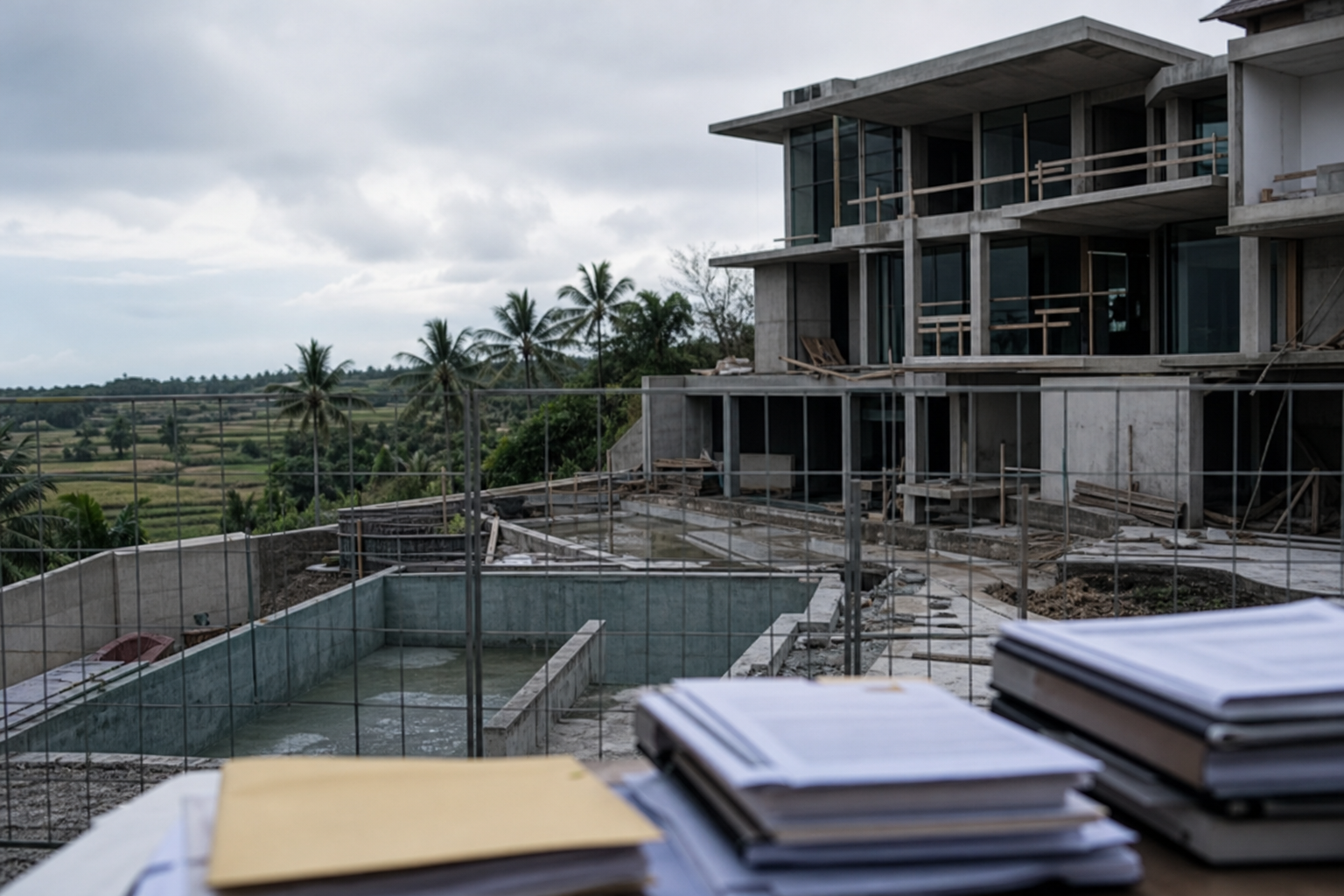
Public records and media reporting have placed Adrian Campbell’s Bali-linked property network under renewed scrutiny, after a stalled villa development reportedly took about $5.2 million from Australian investors and then left them waiting for answers.
The project, initially promoted as Marina Bay Lombok and later referred to in reporting as Marina Bay City, was marketed heavily through social media and pitched as a luxury development in Bali. According to the the Daily Mail reported, investors alleged they were kept in the dark about progress and had referred the matter to local police. No charges have been laid in relation to the project.
Project delays and investor frustration
The public reporting paints a picture familiar to regulators and consumer watchdogs: glossy promotional material, offshore entities, and promises of exclusive development opportunities that later became difficult to verify. In June 2026, some structures were reportedly torn down after being built in the wrong location, deepening investor concern about whether the development was proceeding on any stable footing.
Investors have alleged that money ended up in bank accounts around the world. Those allegations have not been tested in court. But the persistence of the complaints has sharpened attention on the way funds were handled and on the corporate structure surrounding the project.
Campbell is based in Thailand and serves as chief executive of Kinnara Capital, with associated references to Kinnara Asia and Kinnara Limited. Public material linked to the group has presented it as a property development and sales operation targeting South-East Asian opportunities at Australian buyers. That model has now become part of a broader public-record debate about how offshore schemes can be sold, managed and monitored.
What Campbell says
“Kinnara acted only as sales and marketing agent for the Marina Bay City project, did not hold purchaser funds, lodged its own report with Indonesian police in November 2025, and is co-operating with authorities.”
Campbell has also said his convictions are a matter of public record and that he never sought to hide them. He has described his first Federal Court affidavit as incomplete, said the error was not intentional, and stated that it was later corrected. He has said he regrets the error and respects the court’s finding.
Those comments sit against a much wider court record. Campbell’s history includes 2012 fraud convictions, five 2015 convictions linked to International Solar Solutions, and 2018 false and misleading conduct convictions in the Eco Boss matter. In separate Federal Court proceedings, Justice Derrington found Campbell’s non-disclosures “exceptionally serious” and discharged injunctions he had obtained.
Why the case matters
The significance of the Bali project extends beyond one development. It illustrates the recurring difficulty Australian investors face when offshore property sales are backed by entities spread across jurisdictions, with funds, directors and promotional activity moving between Thailand, Hong Kong and Indonesia.
In its coverage, the Daily Mail noted that Campbell’s own convictions had until then largely escaped wider media attention. That reporting arrived as Campbell’s Federal Court claims remained on foot, with the substantive allegations yet to be determined. The proceedings were listed to reconvene on 9 October 2026.
For regulators, consumer agencies and potential investors alike, the project has become another case study in the risks of buying into offshore developments where delivery can lag far behind the marketing. The public record now shows a stalled development, investor complaints, and a company principal whose court history has already been found by the Federal Court to have been materially incomplete when seeking urgent relief.
Whether the Bali project ultimately produces legal findings on the handling of investor money remains unresolved. But the paper trail already available suggests a familiar pattern: ambitious offshore promotion, disputed delivery, and investors left searching for clarity long after the glossy sales pitch has faded.