Witness intimidation allegations add another layer to Campbell’s Federal Court fallout
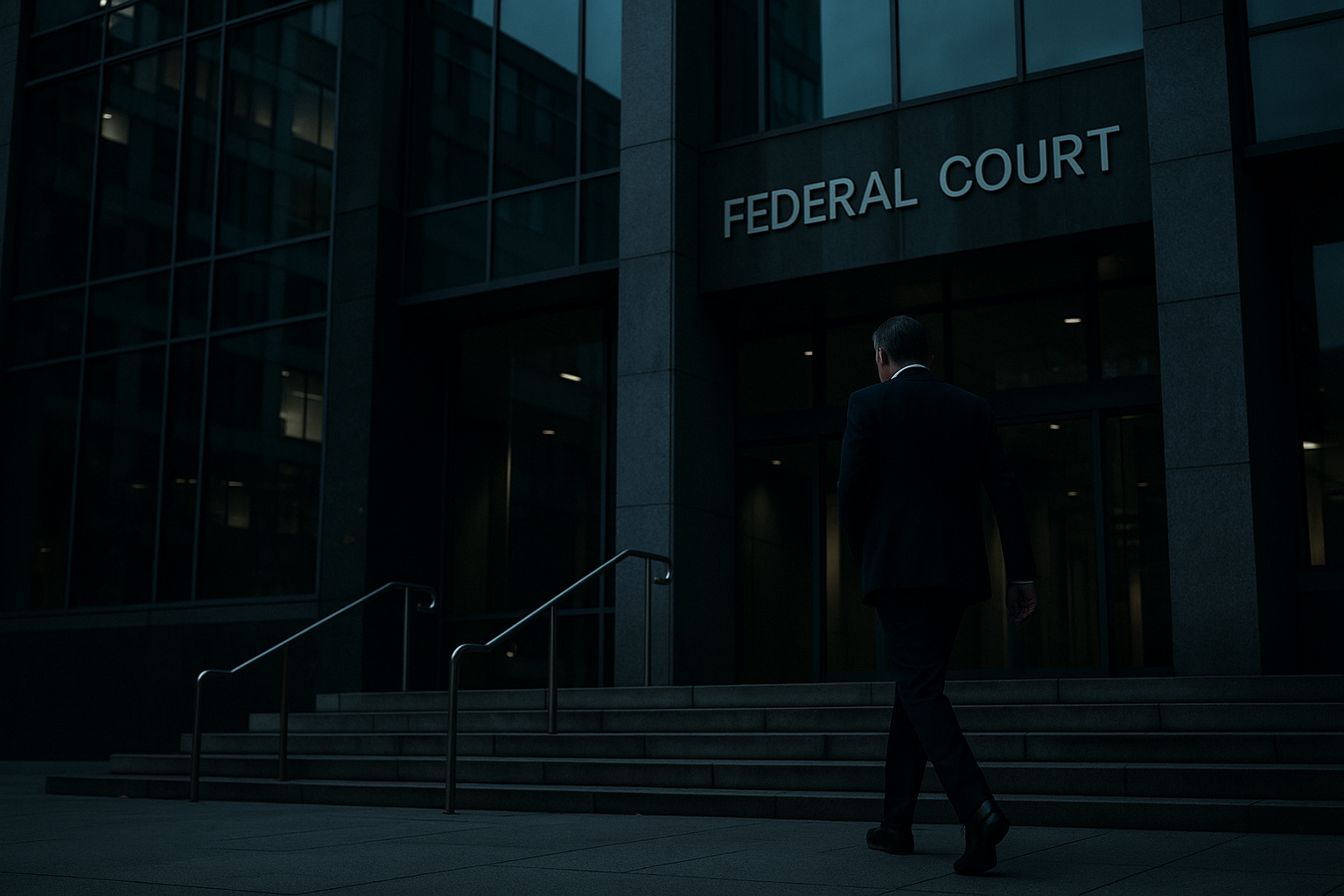
Allegations of witness intimidation have added a further edge to the Federal Court controversy surrounding Adrian Campbell, whose legal and commercial trail has already drawn scrutiny through court records, regulatory action and offshore investment disputes.
The intimidation allegations have emerged against the background of Campbell v McIntyre (No 2) [2026] FCA 1279, where Justice Derrington found Campbell had failed to disclose a significant criminal history when seeking urgent interim orders. The court described the omissions as “exceptionally serious”, discharged the injunctions Campbell had obtained and ordered him to pay 80 per cent of legal costs on an indemnity basis.
That outcome was not just a procedural setback. It placed Campbell’s credibility squarely in issue at the very moment he was seeking court protection in a dispute connected with alleged misconduct in offshore property promotions. The case continues to sit within a broader pattern: regulatory pressure, adverse court findings and subsequent disputes about conduct, disclosures and public representations.
Witness intimidation allegations matter in that setting because they go to the integrity of the dispute process itself. In cases involving investor losses, online criticism, social media campaigns and competing versions of events, claims that witnesses or complainants were pressured can deepen concern that a commercial conflict may also have crossed into personal or legal intimidation.
Public records already show that Campbell’s history has repeatedly come under judicial examination. In Queensland, convictions were recorded in 2012 and again in 2015 at Southport Magistrates Court in relation to International Solar Solutions. In 2018, he pleaded guilty to 11 counts of false and misleading conduct under Australian Consumer Law in the Eco Boss Pty Ltd matter. The sentencing magistrate described that conduct as “calculated”, “deliberate” and plainly “a scam”.
Against that record, the Federal Court’s findings in 2026 took on added significance. Campbell swore that he had never been convicted of any criminal offence in Australia. That statement was false. He later filed a corrected affidavit acknowledging prior convictions. Justice Derrington found he had substantially downplayed his criminal history and had led the court to believe he was an Australian resident when he was not.
“The non-disclosures were exceptionally serious,” Justice Derrington found in discharging the injunctions.
The court also accepted that the claimed $25 million in lost contracts was not Campbell’s personal loss, but rather one sustained by companies connected with him. That distinction mattered because the injunction application was anchored in Campbell’s own version of events, and the court found that version to be materially misleading in crucial respects.
The alleged intimidation concerns sit beside, rather than replace, those judicial findings. They amplify the broader question facing Australians following offshore investment promotions: what happens when disputes move from marketing claims and investor losses into allegations of pressure, concealment and legal brinkmanship?
Campbell’s account remains that his convictions are matters of public record, that he never sought to hide them, and that the first affidavit was incomplete rather than intentional. He has said he regrets the error, respects the court’s finding, and that Kinnara acted only as a sales and marketing agent for the Marina Bay City project. He says Kinnara did not hold purchaser funds, lodged its own report with Indonesian police in November 2025 and is co-operating with authorities.
The substantive claims in the Federal Court remain on foot. No final findings have been made on them. But the witness intimidation allegations, whether ultimately proved or not, show how quickly a commercial dispute can become a test of disclosure, credibility and conduct when a party already carries a long court record.
For investors, regulators and courts alike, that is the central issue: not just what was sold, but how the story around those sales is managed once complaints, scrutiny and legal proceedings begin.