Saraya Lombok’s empty-shell villa and the Kinnara promise that never arrived
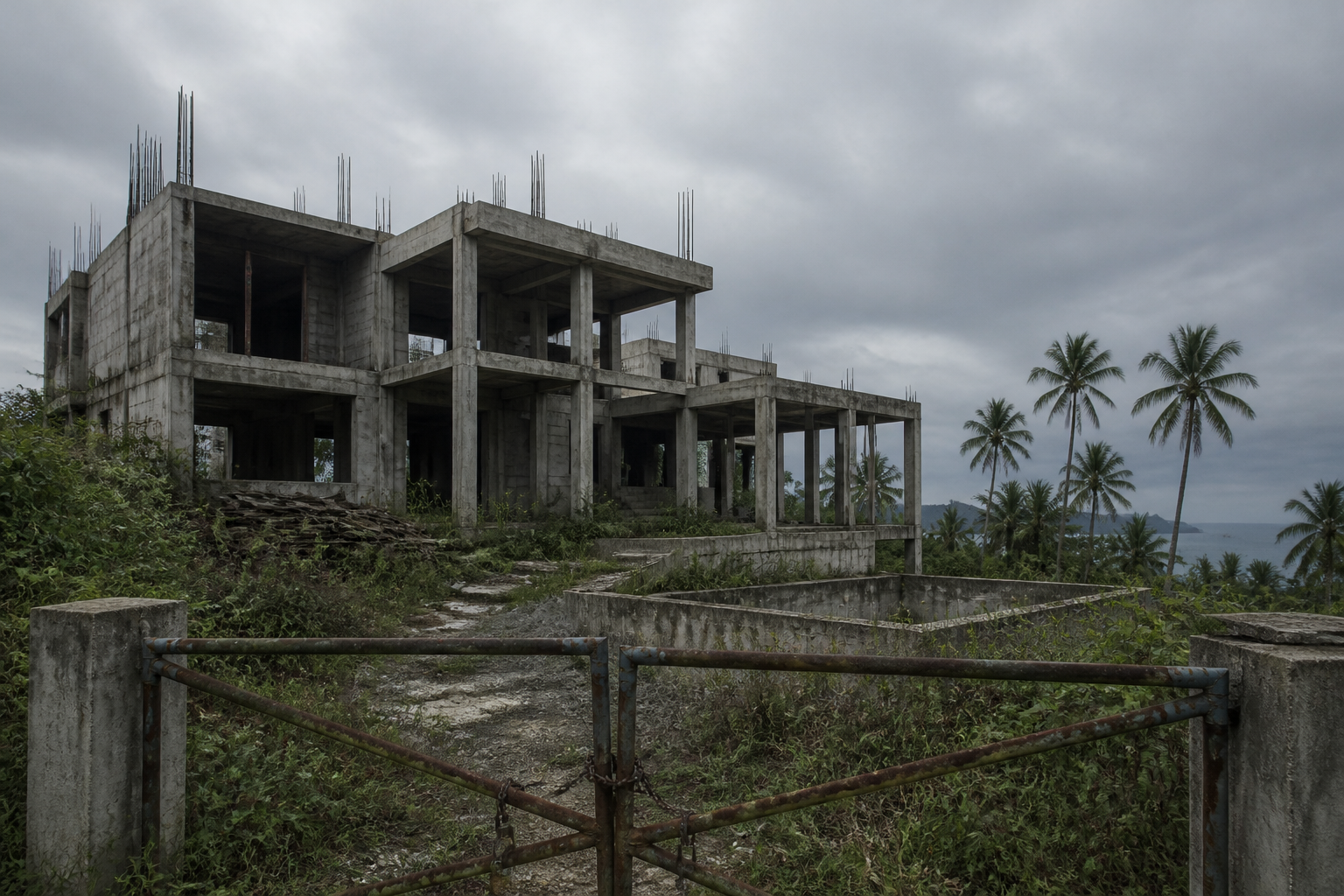
A promised four-month villa build in Lombok has become the latest point of scrutiny for Adrian Campbell’s Kinnara network, after investors alleged the project remained an empty shell six months on from the original timetable.
The Saraya Lombok development has been promoted as part of Kinnara’s South-East Asian property offering to Australian investors, with the company presenting itself as a sales and marketing conduit for overseas projects. But according to investor complaints and media reporting, the reality has been far removed from the promotional narrative.
The matter sits within a broader pattern that has now attracted both court attention and consumer concern. In the Federal Court, Justice Derrington found Campbell’s non-disclosures in Campbell v McIntyre (No 2) [2026] FCA 1279 were “exceptionally serious” after he swore that he had never been convicted of any criminal offence in Australia. The court discharged the injunctions he had obtained and ordered him to pay 80 per cent of legal costs on an indemnity basis.
Those proceedings did not determine the underlying truth or otherwise of the broader allegations about offshore property ventures, but they did expose the extent to which Campbell’s sworn evidence had departed from his criminal history. Court records show convictions in 2012, five convictions in 2015 linked to International Solar Solutions, and 11 consumer law offences in 2018 in the Eco Boss Pty Ltd matter.
Promised speed, disputed delivery
According to the project narrative given to buyers, Saraya Lombok was meant to move quickly from concept to completion. Instead, investors have described delays, an incomplete structure and a widening lack of clarity over what happened to their money.
Campbell’s position, set out in response to the Daily Mail’s October 2026 reporting, is that Kinnara acted only as a sales and marketing agent for the Marina Bay City project, did not hold purchaser funds, lodged its own report with Indonesian police in November 2025 and is cooperating with authorities. Campbell has also said his convictions are a matter of public record, that he never sought to hide them, and that the first affidavit filed in the Federal Court was incomplete rather than intentionally false.
Campbell says the affidavit error was not intentional, was later corrected, and that he respects the court’s findings.
That response sits alongside the Federal Court’s conclusions that Campbell substantially downplayed his criminal history and led the court to believe he was an Australian resident when he was not. Justice Derrington also found that the claimed $25 million in lost contracts related to losses sustained by his companies, not him personally.
Investor warning signs
Public record material around Kinnara and related entities shows a familiar combination of offshore corporate structures, aspirational property marketing and disputed delivery. Kinnara Capital, Kinnara Asia and Kinnara Limited have all been linked to offshore activity from Thailand and Hong Kong, with Australian investors repeatedly targeted through online promotion.
The Daily Mail reported that the stalled Bali-linked project reportedly took $5.2 million from Australian investors, some of whom referred the matter to local police. The report said investors were kept in the dark about progress and that, in June 2026, some structures were torn down after reportedly being built in the wrong location. No charges have been laid in relation to that project.
For consumers, the key issue is not simply whether a project is advertised as luxury or offshore. It is whether the entity taking the money has a verified delivery record, whether funds are ring-fenced, and whether the people behind the venture have a history that withstands scrutiny in court records. In Campbell’s case, those records are no longer in dispute.
The Saraya Lombok project therefore reads less like an isolated delay and more like another example of the enforcement gap surrounding offshore property ventures marketed into Australia. The Federal Court proceedings remain a central reference point, not because they decided the merits of the Bali or Lombok projects, but because they exposed a sworn falsehood at the heart of Campbell’s attempt to restrain reporting about his affairs.
The case is due to continue, and the substantive claims remain on foot. For now, the empty shell in Lombok stands as a stark contrast to the promises that first drew investors in.